The new U.S. administration may extract benefits from growing interactions in Central Asia and a broader network of strategic partners and allies, including Russia, China, Turkey, and the Arab world, by participating in the fields of energy and security, providing benefits to all interested parties. Recent events have shown that Central Asia may become a factor of stability and an independent player on the international stage.
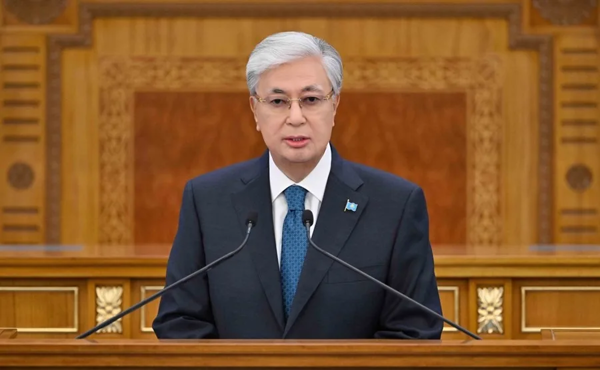
U.S. President Donald Trump stirred public discourse due to audio recordings about diplomatic arrangements in the military conflict in Ukraine. His first step in this direction was a telephone conversation with Kazakhstan President Kassym-Jomart Tokayev at the beginning of December 2024, during which he asked for his opinion on this issue.
The fact of Trump's phone conversation with Tokayev suggests that Kazakhstan may play a role in seeking a diplomatic resolution to the conflict in Ukraine. The potential of Central Asia in shaping the structure of the world and security in Eurasia reinforces the interests of the new Trump administration, resulting in a relevant U.S. policy toward Central Asia, which is likely to be altered.
There was a time when Central Asia was viewed as a world in the focus of attention due to its security problems, such as local instability, the renewal of social and political conflicts, water issues, and the surrounding environment, as well as border conflicts between Kyrgyzstan, Tajikistan, and Uzbekistan since the collapse of the Soviet Union.
However, despite all the differences, recent events have indicated that Central Asia may become a factor of stability and an independent player on the international stage. Initially, there was strengthening of regional cooperation, improvement of relations among the countries of the region, and the official delimitation of disputed borders between Kyrgyzstan and Uzbekistan, followed by a tentative signing of an agreement on the union of Kazakhstan and Uzbekistan, occasionally competing for the attention of decades of governance. In the end, the cooperation of these two countries puts regional and security issues in the foreground.
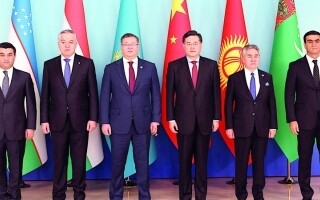
In conclusion, the first meeting of the secretaries of the Security Councils of Central Asian countries last year made this region more influential and significant on the world stage due to its peaceful diplomatic negotiation of inherited or emerging conflicts. Formulating the framework of external policies of five Central Asian countries, as well as the USA, has also reached its peak since January 2022, which is considered an important step towards global peace and security.
Regardless of who holds power in the USA, whether Republicans or Democrats, the country seeks to reduce its reliance on China, and cooperation with this region, which has strategic resources, will likely benefit the Trump administration. In this context, dialogue with Central Asian countries, rich in resources, initiated in 2023, is of great importance since China is a key supplier of many metals, including critical minerals under U.S. strategic regulations, such as lithium, cobalt, and nickel, as well as strategic resources and multilateral cooperation in the energy sector, potentially becoming key areas of cooperation for the Trump administration with the Central Asian countries.
Taking this into account, the renewal of strategies of Central Asian countries based on fewer than two key aspects - increasing importance and necessity for further development of the Caspian transit route, also known as the "Middle Route," passing through the Caspian Sea and the Caucasus area, bypassing Russia, directed at the export of manufactured goods and resources to Europe, while the time when the European Union and the USA agreed on the creation of partnerships to strengthen this route, and secondly: the strategy for the 2019-2025 period, with a primary focus on Afghanistan, since the USA has withdrawn its troops from Afghanistan in 2021, and the United States has not recognized the Taliban or any other organization as the legitimate government of Afghanistan, which makes all the countries of Central Asia more important as a "bridge" for monitoring events in Afghanistan, and in all these situations Kazakhstan and Uzbekistan, becoming two rising powers and strategic partners of the USA, will play a decisive role in the region.
"Responsible Stakeholders" participating in dialogues, which takes a visible place in the rising interests of Russia, China, Turkey, Iran, and the West in Central Asia, remains likely that even a larger and economically strong country, like Kazakhstan, will struggle to maintain its maneuvering capability as a muted power in the long-term perspective. The five countries of this region are most likely to achieve their goals when functioning as a regional group with a common agenda, which Kazakhstan, Kyrgyzstan, Tajikistan, Turkmenistan, and Uzbekistan are starting to form in 2022.
In light of this, the Trump administration is logically expected to adopt this approach, based on the achievement of agreements reflecting the realities of the foreign policy demonstrated by the Central Asian countries.